বিগত ২৫ মার্চ ২০১৪ ইং তারিখে মোহাম্মদপুরে অবস্থিত বাংলাদেশ খ্রীষ্টান বিশপ সেন্টার (সিবিসিবি) এর কন্ফারেন্স রুমে বাংলাদেশ ইন্ডিজেনাস পিপলস’ নেটওয়ার্ক অন ক্লাইমেট চেঞ্জ এন্ড বায়োডাইবারসিটি (বিপনেট) এর বার্ষিক সাধারণ সভা অনুষ্টিত হয়। বিপনেটের কনভেনর ব্যারিষ্টার রাজা দেবাশীষ রায় এর সভাপতিত্বে দেশের সাতটি অঞ্চল থেকে আগত বিপনেটের সদস্যবৃন্দের উপস্থিতিতে সভাটি অনুষ্টিত হয়।
Showing posts with label Programmes. Show all posts
Showing posts with label Programmes. Show all posts
Tuesday, November 15, 2016

Sunday, February 14, 2016
BIPNet’s Shylet regional meeting held at Shreemangal, Shylet, Bangladesh
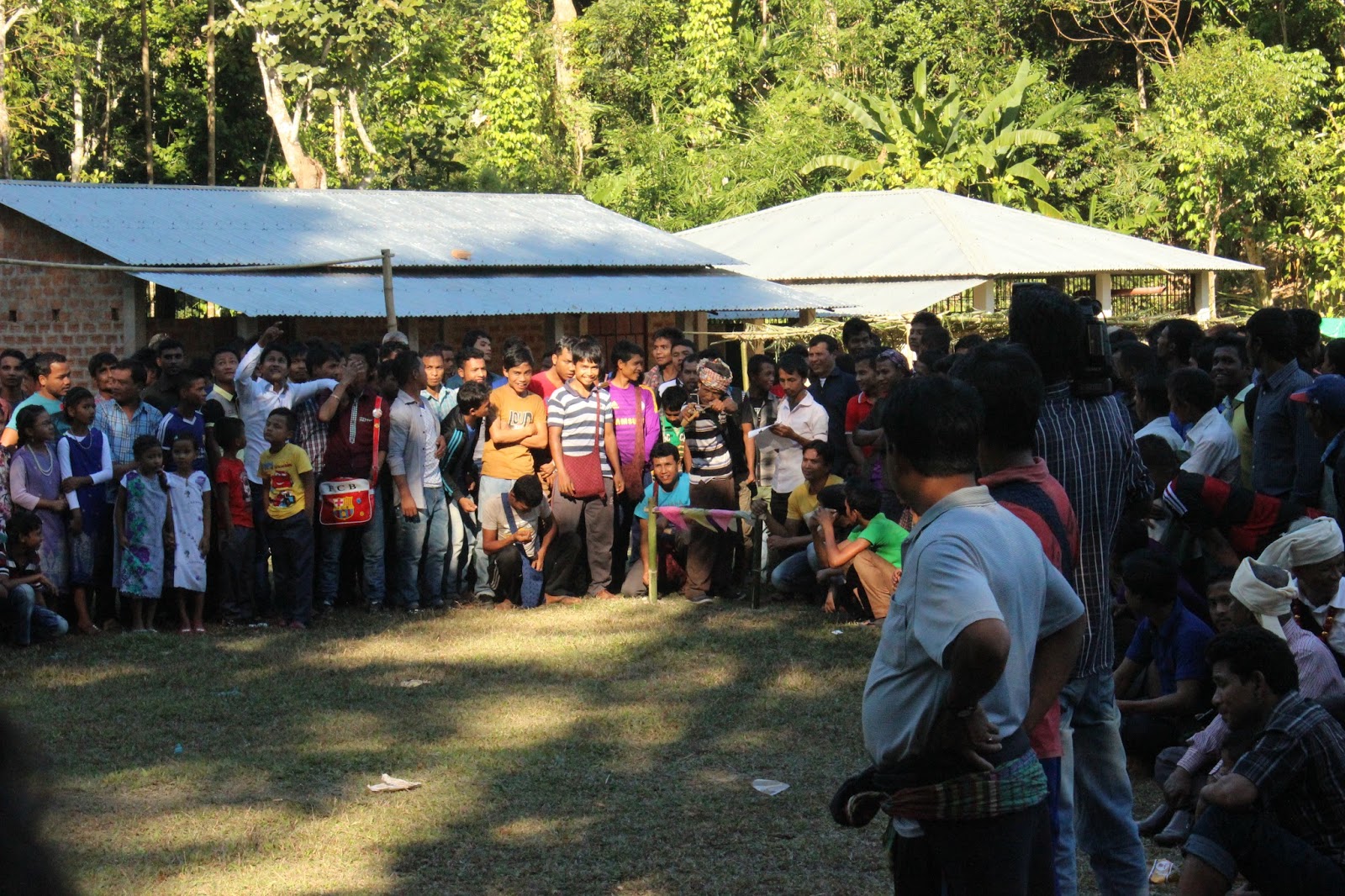
Shreemangal, Shylet 24 November, 2015: A regional meeting was held
in Magurchara Punji, Shreemangal, Shylet region on 24 November, 2015. Participants
came from different part of shylet region in the meeting. During the meeting
they had organized a full day mela and different type of traditional
competition. The meeting participants in general have expressed their concern
over the increasing numbers of incidents of alienation, discrimination in
access to resources and negligence, disrespect and non-recognition of the
customary practices of the indigenous peoples in all over the country. These
are causing more of poverty and vulnerability within the communities. Participants
also expressed deep concern over the initiatives of tourism by the various
government and private agencies in Shylet, Rangamati and Bandarban hill
district, which may lead to lose of the community’s customary land ownership,
traditional livelihood and dilute their culture and practices. Many of them
raise questions about the tourism initiatives for whom?




Wednesday, October 14, 2015
BIPNet’s CHT and Cox’s Bazar regional meeting held at Rangamati, Chittagong Hill Tracts, Bangladesh
Alienation, imposing restriction and discrimination in access to resources and negligence, disrespect and non-recognition of the customary practices of the indigenous peoples are major causes for increasing the poverty and vulnerability among the indigenous peoples of Bangladesh


Rangamati, 12 October 2015: The meeting participants in general have expressed their concern over the increasing numbers of incidents of alienation, imposing restriction and discrimination in access to resources and negligence, disrespect and non-recognition of the customary practices of the indigenous peoples in all over the country. These are causing more of poverty and vulnerability within the communities. The participants of the CHT said that the land grabbing in CHT is still continuing alarmingly. The expansion of Reserve Forest (RF), establishment of new Border Guard Bangladesh (BGB) camps, tourist resorts, leasing out their Jum (shifting cultivation) land areas among the other issues are much highlighted in the meeting. Participants also expressed deep concern over the initiatives of tourism by the various government and private agencies in Rangamati and Bandarban hill district, which may lead to lose of the community’s customary land ownership, traditional livelihood and dilute their culture and practices. The communities, who are small in numbers (i.e. Mro people), will be effected most due to these initiatives. Many of them raise questions about the tourism initiatives for whom? and in what cost?
Wednesday, January 28, 2015
.jpg)
.jpg)
.jpg)
.jpg)
Saturday, March 29, 2014
BIPNetCCBD 1st Meeting of the Sub-Committee (Constitution/By-Laws) Kamalganj Khasia Punji, Moulbazar, Sylhet held on February 07, 2014, Friday
A BIPNET Sub Committee Meeting was held on 07 february 2014 at Magurchara, Shreemangal.
Meeting agenda Was:
1. Constitution/By-laws of BIPNetCCBD;
2. Next course of activities in the field of REDD+ in Bangladesh---to arrange two meetings by June 2014;
3. Lobby & advocacy on the proposed Forest Amendment Act 2012;
1. Preparation of constitution/by-laws of BIPNetCCBD: The following points came up in the discussion:
- Constitution of BIPNetCCBD would have three tiers, namely a) General Assembly; b) Central Committee; and c) Steering Committee;
- General Assembly would be the highest policy making body, consisting of all BIPNetCCBD member organizations, and would be held once in a year;
- Decisions taken up at the meetings of Central Committee and Steering Committee would have to be approved at the General Assembly;
- Central Committee would be consisted of around 15-21 members;
- Steering Committee would be of around 5/6 members;
- Official designations of the members of the Central Committee would be like: Chairperson (1 post), and the rest as ‘Member Executive (Forest)’ ‘Member Executive (Land)’ etc.
- Each of the Member Executives can keep one advisor who can be either an IP/non-IP;
- Central Committee to be held twice in a year;
- The tenure of every Central Committee would last for 3 years, and with the end of the Central Committee, all other committees like Steering Committees, would also expire;
- BIPNetCCBD would have its own bank account;
- Internal audit system should be in practice and for that, BIPNet’s own finance rules/policies should be formulated;
- An individual or an organization can be a member of BIPNet;
- To be a member of BIPNetCCBD, an organization has to be run and governed by IPs, has to have aims and objectives related to climate change and environment, and has to have staff who have expertise in climate change;
- For an individual (like His Majesty Raja Devasish Roy) to be a member of BIPNet, he/she has to be an indigenous person and should have enough knowledge about climate change and environment. The person can be an academician, journalist, writer, poet etc.
- The contact/focal persons of BIPNet would not be allowed to represent more than one member organization;
- Registered or non-registered organizations can be a member of BIPNet-----registration is not mandatory;
- In the meeting one Munipuri person was present who was representing an NGO run and governed by the indigenous Munipuri people in Sylhet; this NGO can be a member organization of BIPNet;
- Organizations run and governed by the non-IPs cannot be a member of BIPNet but can be a friend of BIPNet;
- BARCIK (focal person is Mr. Sukanta Sen, who is a non-IP;) and Adivasi Sangskritik Unnyan Songstha, Rajshahi (focal person is Mr. Raj Kumar Shaw who is a non-IP) should be dropped from the existing list of the member organizations of BIPNet;
- BIPNet’s present address should be the same as the Maleya Foundation’s one;
- Prof. Gones Soren requested to consider granting membership for one Rajshahi based NGO called ‘Ashroi’ which has staff from both IPs and non-IPs but not fully run and governed by the IPs; he is one of the advisors of the NGO;
- Registration fees for the BIPNet members: Tk 1,000/ (one thousand taka) for a member organization; and Tk 5,00/ for an individual;
- Monthly fees: Tk 100/ (for a member organization) and Tk 50/ (for an individual member);
- For better coordination of BIPNet activities, there can be formed ‘regional coordination committees’ for the areas of Rajshahi, Sylhet, Barishal and the CHT;
- BIPNet’s main aim and objective would be to make BIPNet more involved in the processes of climate change related campaigns taking place at national and international levels;
- Campaign for raising awareness of climate change issues among the IPs of BD can be an objective of BIPNet;
- Dipujjal Khisa carried to the program a copy of the constitution of the now defunct Hill Tracts NGO Forum (CHTNF), and everyone verbally agreed to borrow some ideas and designs from the constitution of the CHTNF while formulating by-laws of the BIPNet;
Wednesday, November 27, 2013
General Assembly of Bangladesh Indigenous Peoples' Network on Climate Change and Bio- Diversity (BIPNetCCBD) was held on 21 November at Shyamoli, Dhaka, Bangladesh
Some of Programme Photos:-


BIPNetCCBD Convener Raja Devasish Roy giving speech
Wednesday, July 11, 2012
BIPNetCCBD and Maleya Foundation holds press conference on Forest Act, 1927 and Wildlife (Preservation) Act, 2010

[(From left) Sudatta Bikash Tanchangya, general secretary, Movement for the protection of land and forest in CHT,
His Majesty Barrister Raja Devasish Roy, chairperson of Maleya Foundation, and Gautam Dewan, President of
Movement for the protection of land and forest in CHT, present their statements at the press
conference.]
Maleya
Foundation in collaboration with Bangladesh Indigenous Peoples’ Network on Climate Change and
Biodiversity (BIPNetCCBD), and
Movement for the protection of land and forest in CHT, held a press conference on the draft amendment to the Forest
Act, 1927 and the draft of Wildlife (Preservation) Act, 2010, at Dhaka press
club on June 12, 2012.

[A partial view of the audience at the program;]
Sudatta Bikash
Tanchangya, general secretary, Movement for the protection of land and forest in CHT said there is a new clause titled ‘other forest’ in the draft amendment to the
Forest Act, 1927. This clause allows the government absolute authority to
declare the lands where for ages the indigenous peoples have been following
traditional cultivation, widely known as ‘jhum’
cultivation, other forests. Once an area is declared ‘other forest’, the forest dependent peoples, if found even catching
fish inside, can be charged with criminal cases like the way it is in practice
in a reserve forest, Mr. Tanchangya went on saying, adding further that if the
government do not consult the forest dependent indigenous peoples before giving
a final nod to these two draft Acts, their will remain no forest, and existence
of forest-dependent indigenous peoples in the future.
In his short speech, His Majesty
Barrister Raja Devasish Roy, chairperson of Maleya Foundation, said that the draft amendment to the Forest Act,
1927 and the draft of Wildlife (Preservation) Act, 2010 are totally opposite to
the forest management system, which involves the local forest-dependent peoples
in the entire process. Since the birth of the country, Bangladesh signed and
ratified many conventions and treaties i.e. Convention on Biological Diversity
(CBD), which speak for upholding the rights of the forest-dependent peoples
while going for managing a forest. Even the 1927 Forest Act has a clause titled
‘village forest’, using what the
government can easily hand over the management system of a forest to local
village community people. But it seems the government is walking on the wrong
way as through the draft amendment to the Forest Act, 1927 and the draft of
Wildlife (Preservation) Act, 2010, the government is likely to be in favor of
giving more power to the Forest Department authority. If these draft Acts
finally come into being, the Forest Department’s officials will be able to use
fire arms at will in the name of self-defense against the forest-dependent
peoples, and this is against human rights,
His Majesty said further.
He recollected the days when he had been a Special
Assistant to the Chief Advisor (2006-2008) of Bangladesh with the rank and
status of a State Minister for the Ministry of Environment and Forests, to
share with the audience that the forests managed by Forest Department are less
rich than those managed by local indigenous peoples. At this stage he pointed a
finger at some Ms. Dona Chakma, who was present among the audience, and said,
“Dona Chakma and her village people in CHT have a forest covering an area of
some 500 acres of land, where still tigers roam around in the wild. But we have
not heard there are tigers in any forests, managed by the Forest Department.”
His Majesty
finally urged the government to go for making the clauses of the two draft Acts
widely known to all, and for consulting the forest-dependent indigenous peoples
and the Regional Council, and the Hill District Councils in CHT as per the
requirements inscribed in CHT-Accord.
It should be mentioned that the draft of Wildlife
(Preservation) Act, 2010 has recently been passed in the House on July 08,
2012.
Subscribe to:
Posts (Atom)